
ReplacementParts.app › Measure a part
How to measure and photograph a part
Good photos and a few caliper measurements are what turn a broken clip into an accurate quote.
Last reviewed 12 October 2026.
Eight steps to a part a maker can quote
- Find the model numberLook for the rating plate or label: inside the door of a washing machine or dishwasher, on the back or base of small appliances, on the frame of a bike, in the service book of a car. Photograph it. If a part number is moulded into the broken part, photograph that too.
- Keep every piecePut all the broken pieces in a bag, including small fragments. If you can, fit them together and tape them so the maker can see the original shape.
- Photograph each sideTake straight-on photos of the front, back, top, bottom and both sides, plus one three-quarter view. Use daylight or a bright lamp and a plain background that contrasts with the part.
- Add a scale photoTake one photo with a ruler or open calipers lying next to the part, at the same height as the part, shot from directly above to avoid distortion.
- Close up on the detailsClips, tabs, hooks, holes, threads and gear teeth decide whether the part fits. Take close-ups of each, and a photo of where the part sits in the product.
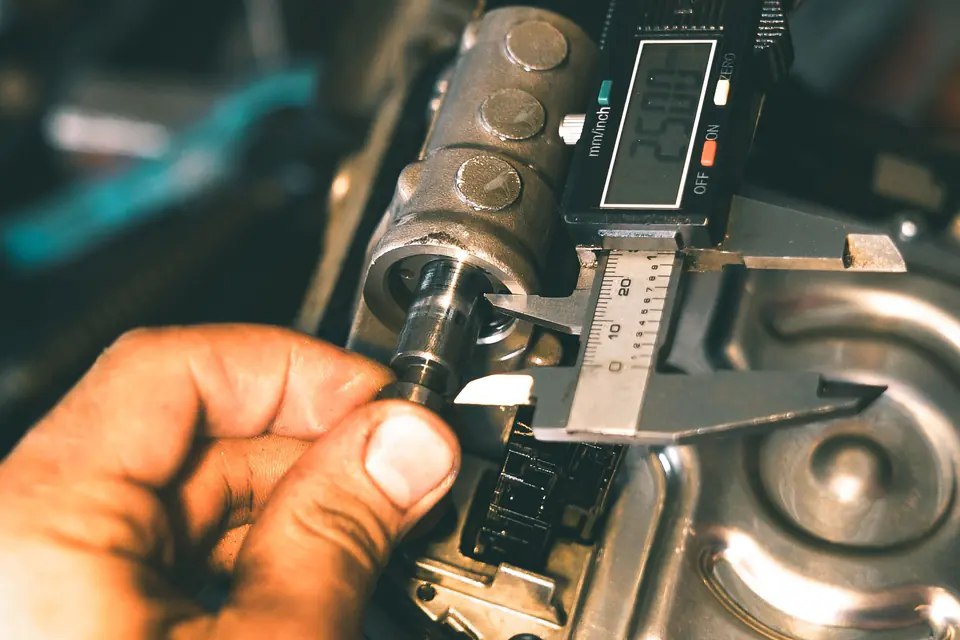
- Measure with calipersIn millimetres: overall length, width and height; hole diameters and the distance between hole centres; wall thickness; thread size and pitch if there is a thread; for a gear, the tooth count, outside diameter and bore. Measure twice.
- Measure what it mates withIf the part clips onto a rail, slides on a shaft or sits in a slot, measure that too. The mating part is often less worn than the broken one, so its dimensions are more reliable.
- Note how it is usedWrite down whether it gets hot, wet or sunlit, whether it moves or carries a load, whether it flexes (snap-fits), and what colour and finish you want. Then post the part on The Spool List.
What you need
- Digital or dial calipers. An inexpensive pair is enough; a steel ruler will do for a first quote.
- A phone camera, a plain background and good light.
- A pen and paper, or the part brief builder, to write the measurements down as you go.
Common mistakes
- Photos taken at an angle. Perspective makes holes look oval and spacing look shorter. Shoot straight on.
- Measuring the broken edge. Measure the intact parts of the piece, or the mating part.
- Mixing units. Write “mm” next to every number, or say clearly that you measured in inches.
- Leaving out how it is used. A clip that sits in a hot car needs a different material from the same clip in a wardrobe.
- Throwing the original away. Many makers prefer to work from the real part, even when it is in pieces.
Sending the original
If the maker asks for the broken part, agree postage or drop-off before you send it, and keep a photo record. A maker near you who takes drop-offs saves postage both ways. You can find out whether a maker offers pickup by asking in the job thread before you accept a quote.
Broken part in your hand?
Photograph it, measure it, post it once.
Post the part free on The Spool List. Makers quote with a price and a lead time, and the platform holds your payment until you confirm delivery.
Sources
Figures are quoted as the sources state them, checked 12 October 2026. Spotted something out of date? The rules and schemes change often; check the source.