
How to measure a broken part so a maker can remake it
Caliper technique for broken parts: overall size, hole spacing, wall thickness, threads and gear teeth, plus how to deal with worn or snapped edges.

By the ReplacementParts.app editors, The Spool List · Published October 28, 2026
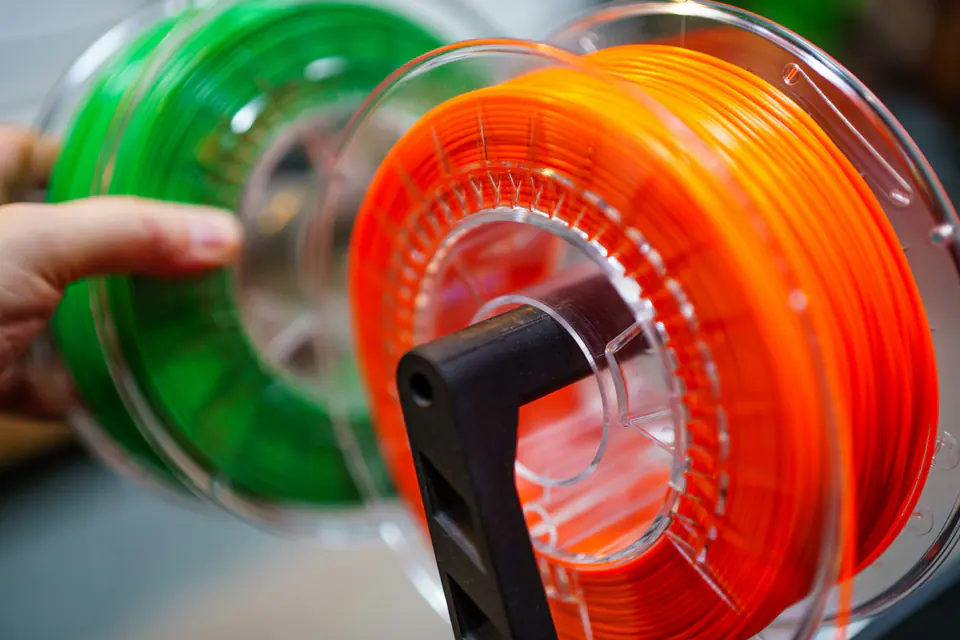
Match the material to the part's life, not its looks. A clip inside a sun-heated car needs PETG or ASA, never PLA, which softens above 60 °C. A garden fitting needs ASA's UV resistance. A gear in a roller blind needs nylon, which resists abrasion. A cosmetic cap inside a wardrobe is fine in PLA, which is also the cheap way to test a fit first.
Our material guide sets out the rules. This post applies them to four ordinary broken parts, the kind that turn up in job posts, to show how the answer changes with where the part lives. All the material properties quoted come from the Prusa Knowledge Base; the temperatures are the manufacturer's practical guidance for finished parts.
The part: a small clip that holds a door-card or dashboard trim panel in place on an older car. It carries no load beyond the panel's weight, but the car sits in the sun.
The answer: PETG or ASA, not PLA. PLA "gets soft and deforms at temperatures over 60 °C" [1], and a closed car in summer is exactly where that matters. PETG suits "temperatures below 80 °C" [2]; ASA offers "temperature resistance (up to 93 °C)" [3]. For a clip on the top of the dashboard, under the windscreen, ask for ASA.
Tell the maker: where in the car it sits, whether it gets direct sun, and how the clip snaps in. Trim clips only: nothing that holds a seat, a seat belt, an airbag cover or anything in the braking or steering system.
The part: a plastic handle cap or guide on a hose reel that lives outside all year.
The answer: ASA, or PETG if it is shaded. ASA is "suitable for outdoor use" with "UV and temperature resistance" [3]. PETG is "suitable both for interior and most exterior use" [2]. PLA "degrades under UV light" and is "not suitable for technical and outdoor use" [1].
Tell the maker: sun or shade, whether it is under water pressure (if it is, it is a plumbing part, not a maker job), and whether it gets knocked or stood on.
The part: a small gear or clutch piece that wears out in a blind's chain mechanism.
The answer: nylon. The manufacturer calls nylon an "extremely resilient material, resistant to abrasion" [4], which is what a part that turns against another part needs. Manufacturers use it the same way: Mercedes-Benz Classic makes 3D-printed sunroof rollers in PA12, a nylon, for cars whose original tools no longer exist [5]. Nylon absorbs water "up to 10% of filament weight" if the filament is stored badly [4], so it is a job for a maker who dries their material.
Tell the maker: the tooth count, the outside diameter and the bore, plus what the gear meshes with. The measuring guide shows how.
The part: a cover cap over a hinge or a shelf pin inside a wardrobe. It is indoors, at room temperature, and holds nothing up.
The answer: PLA is fine. This is the indoor, low-stress case PLA suits, and it is the cheapest material to print. It is also a good way to test a fit: some makers print a quick PLA version to check the measurements before the final part in another material.
Tell the maker: the colour and finish you want, and how many you need. If the cap also supports the shelf, it is no longer cosmetic: say so, and expect PETG.
Each answer came from three questions: how hot does it get, does it see sunlight, and does it rub or wear? Ask them before you post, add the answers to your job, and the maker can quote the right material first time. If a part carries a person, holds back gas or pressure, or is part of a vehicle's safety system, no material is the right answer: see parts you should never 3D print.
Post your part free on The Spool List with your photos and measurements. Makers who print, machine or cut parts send quotes with a price and a lead time, and you choose.
ReplacementParts.app is run by The Spool List Ltd. This button opens our own marketplace, which earns a commission from makers on completed orders.
Makers: get paid to remake parts. Quote on replacement-part jobs that come with photos and measurements, with no listing fee. Join The Spool List as a maker
Figures are quoted as the sources state them, checked October 28, 2026. Rules and schemes change, so check the source before relying on a figure.
Drafted with AI assistance and checked against the sources above by the ReplacementParts.app editors. ReplacementParts.app is a guide published by The Spool List Ltd. Its buttons lead to The Spool List, our marketplace, which earns a commission from makers on completed orders. We don't sell parts ourselves, and no maker pays to appear in these guides. ReplacementParts.app is not affiliated with or endorsed by any manufacturer named on this page.
Post photos and measurements once and compare quotes. The maker is paid only after you confirm delivery. Own a printer, lathe or CNC? List it free.
Post a job — it's freeOr get The Spool List app: